
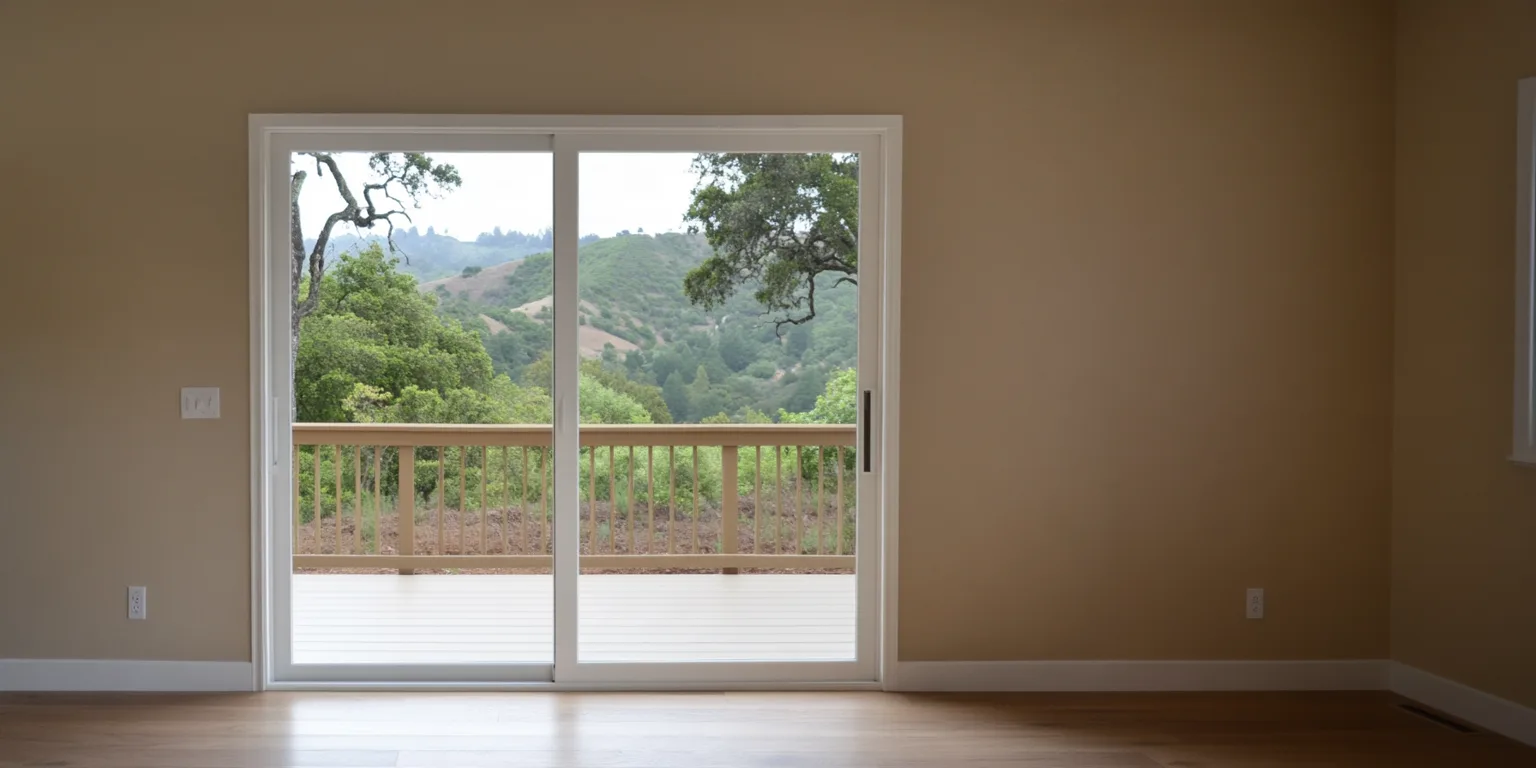
In a lot of Marin homes, the patio door is the most-used opening in the house and the worst-performing one. Old aluminum sliders get heavy as the rollers wear out, the track fills with grit, and the weatherstripping flattens until you can feel the breeze from across the room. In Tiburon, where so many homes open onto a deck facing the bay, that door takes the full force of the wind off Raccoon Strait. Down the shore in Sausalito, salt air pits the hardware and seizes the locks. A new door fixes all of that at once, and it's often the single biggest change you'll feel in a living room.
Below we cover the signs your door is done, the main styles of patio door, how we install them and what to think about for security. Many homeowners pair a new door with the windows around it, which is covered on our window replacement page, so everything matches in color and frame style.
Signs Your Patio Door Needs Replacing
The obvious one is a slider you have to fight. If cleaning the track and adjusting the rollers doesn't make it glide, the rollers or the track itself are worn out. Other signs: daylight or air coming through around the edges when the door is closed, condensation or fog between the glass panes, a latch that doesn't line up anymore, and water stains on the floor just inside the door after winter storms. That last one matters most. A door that lets water in can quietly rot the framing beneath it, and the repair gets more expensive every rainy season it's left alone.
Sliding, French and Hinged Patio Doors Explained
A sliding door has one fixed panel and one that rolls on a track. It saves floor space and suits most decks and patios. A French door has two hinged panels that swing open, usually inward, and gives you a wide, open doorway with a more traditional look. A hinged patio door has one swinging panel next to a fixed one, which keeps the French door look in a tighter opening. Multi-panel sliding and folding doors stack several panels to one side for a nearly open wall, and they need careful framing and a level threshold to work well. All of these come in vinyl, fiberglass, wood-clad and aluminum frames, with the same dual-pane glass options as windows.
How We Install a New Patio Door
Patio doors are installed full-frame more often than windows, because the threshold and the subfloor under it have to be right. We remove the old door, check the sill and framing for rot or water damage, and repair anything soft before the new unit goes in. The threshold gets a sloped sill pan or flashing so any water that reaches it drains back outside. We set the door level and square, shim and fasten it, adjust the rollers or hinges, and seal and insulate the gap around the frame. Inside, we reinstall or replace the trim. Most single doors are done in a day, and we test the lock, the latch and the slide with you before we leave.
Security and Glass Options
A patio door is a common way in for burglars, so it's worth choosing hardware with that in mind. Look for a multi-point lock that latches at the top and bottom as well as the middle, and an anti-lift feature that keeps a sliding panel from being popped off its track. Building code requires tempered safety glass in doors, and laminated glass adds another layer of protection because it holds together when broken. If the door faces west or south, a low-E coating that cuts solar heat will keep the room more comfortable in the late afternoon. For doors near a busy street, laminated glass also helps with noise.
If your door is in decent shape but the slide or the glass has failed, a window and door repair visit may be all it needs.
Common Questions
Usually, yes. The two are often made in the same standard widths, so a French door can go into a slider's opening without changing the wall. You'll need clear floor space for the panels to swing, and we'll help you choose between inswing and outswing based on your deck and furniture. We check the opening and the room before recommending it.
Most single sliding or French doors are installed in a day. The new door is usually built to order, so plan on a few weeks between the estimate and the install. If we find rot in the subfloor or framing once the old door is out, the repair can add a few hours to a day, and we'll show you the damage before doing any extra work.
If the frame and glass are in good shape and the only problem is a hard slide, new rollers and a cleaned or capped track can make it work like new for much less. Replacement makes more sense when the glass has fogged, the frame is bent or corroded, or water is getting in at the threshold.