
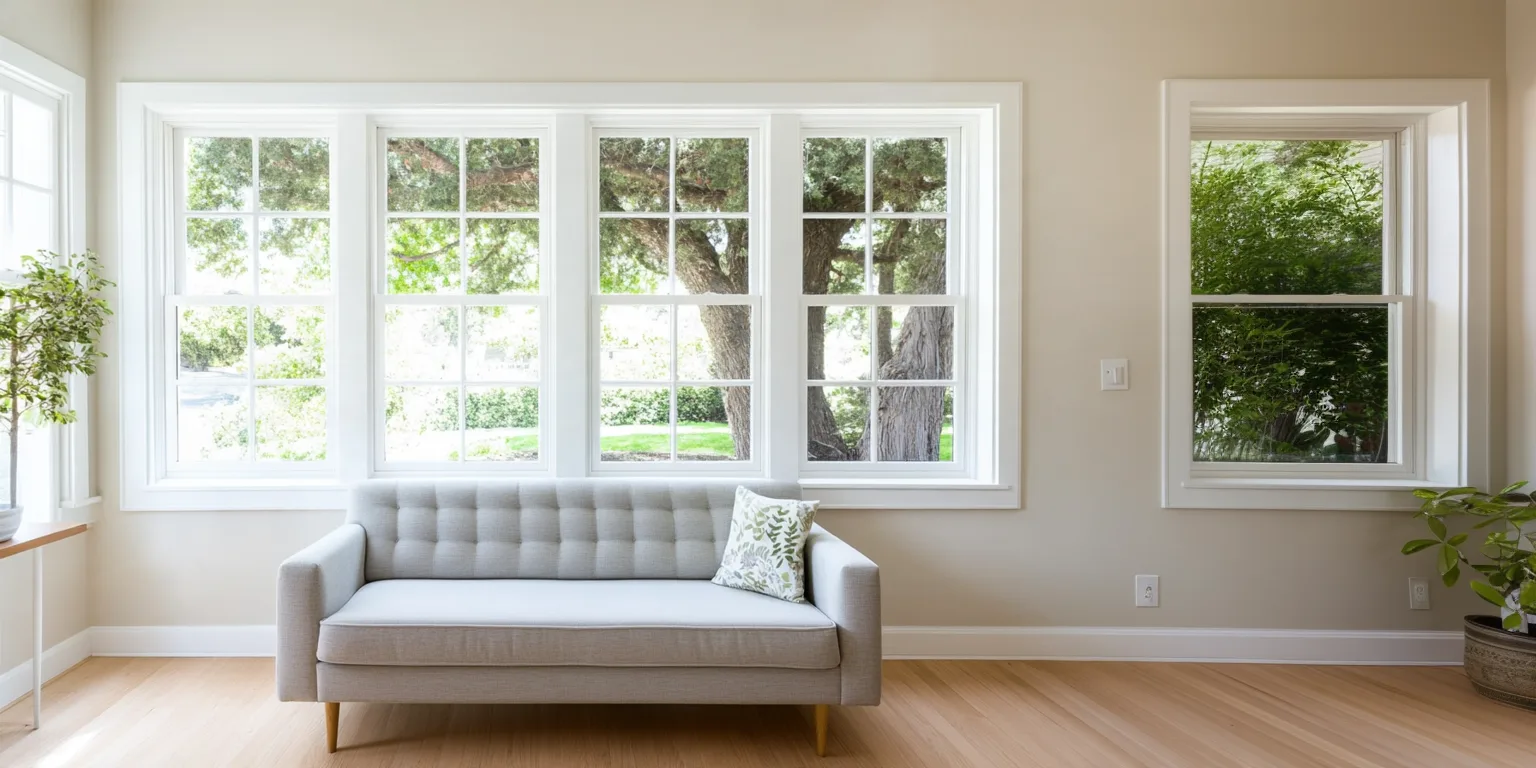
Most people start thinking about new windows because of one room. The back bedroom that never warms up, the kitchen window that fogs over every morning, the living room slider you have to put your shoulder into. Look closer and the rest of the house usually tells the same story: dried-out glazing, frames that flex when you push on them, a cloudy pane or two. In San Rafael and Larkspur we see it constantly in homes from the '60s and '70s, where the original aluminum windows have simply outlived their seals. Replacing them is one of the few upgrades you feel the same day: quieter rooms, steadier temperatures and windows that open the way they should.
Below we cover the signs it's time, the difference between retrofit and full-frame installs, how our crews handle install day, and how to read the energy label so you're comparing real numbers. If you already know you want low upkeep at a fair price, our vinyl window replacement page goes deeper on the most popular option in the county.
Signs Your Windows Are Due
A window doesn't have to be broken to be finished. The most common sign is condensation or haze between the two panes of glass, which means the seal has failed and the insulating gas inside has leaked out. That doesn't come back. Other giveaways are easier to feel than see. Hold your hand near the frame on a windy day and you'll notice the air moving. Sashes that slam down, won't lock or have to be propped up with a stick mean the balances are worn. Soft or dark wood at the bottom of the frame points to rot. And if the glass is single-pane, the window is costing you heat every winter night no matter what shape it's in. One of these by itself can often be repaired. Three or four across the house usually means it's time.
Retrofit vs Full-Frame, in Plain English
There are two ways to put in a new window, and the choice drives the price. A retrofit (also called an insert) leaves the existing frame in the wall. We pull out the old sashes and glass, check that the frame is sound, set a new window inside it, then seal and trim it. Your stucco, siding and interior drywall stay untouched, which is why most Marin replacements are done this way. A full-frame install removes everything down to the rough opening, frame and trim included. It costs more and takes longer because the outside and inside finishes have to be patched, but it's the right call when the old frame is rotted or out of square, or when you want to change the size of the opening. We'll tell you which one each window needs after we see it.
How We Handle Install Day
Before the crew arrives, we confirm the order is complete and every window matches its opening. On the day itself we lay down drop cloths, move furniture back from the walls, and work one room at a time so your house is never wide open. Each old unit comes out, the opening gets cleaned and checked for damage, and the new window goes in level and square. We seal it against air and water, insulate the gap around the frame, then put the trim back so it looks finished inside and out. Before we leave, we open and lock every window with you, peel the labels, clean the glass and haul the old units away. A typical three-bedroom house is done in a day or two.
Reading the Energy Label Before You Buy
Every new window carries a sticker from the National Fenestration Rating Council, and it's the easiest way to compare products from different makers. The number that matters most here is the U-factor, which measures how fast heat escapes through the window. Lower is better, and a good dual-pane unit rates far below an old single-pane one. The second number, Solar Heat Gain Coefficient, tells you how much of the sun's heat comes through the glass. A lower one keeps west-facing rooms cooler on summer afternoons. You'll also see visible transmittance, which is simply how much daylight gets through. We go over these numbers at the estimate so you're comparing windows on facts, and so the ones you pick meet California's energy code.
If your biggest headache is a heavy old slider rather than the windows themselves, take a look at our patio door replacement work too.
Common Questions
Yes, and plenty of Marin homeowners do it that way, starting with the worst rooms or the side of the house that takes the weather. The one thing to watch is matching. If you plan to finish the rest later, we note the exact product line, frame color and grille pattern on your quote so the next round looks like it went in with the first. Doing a few more at once can also bring the per-window cost down.
With a retrofit install, no. The existing frame stays in the wall, so the stucco, siding and drywall around it aren't disturbed. Full-frame installs are different: the old frame comes out completely, so the finish around the opening has to be cut back and patched afterward. We include that patching in the quote and tell you up front which windows need it, so nothing catches you off guard once the work starts.
They help a lot, especially if you're replacing single-pane glass. Two panes with a sealed space between them block far more sound than one, and tighter frames close the gaps where noise leaks in. Homes near Highway 101 or Sir Francis Drake Boulevard notice it most. For bedrooms that face a busy road, we can also quote laminated glass, which does the most to quiet traffic.